Cold improvements how ground behaves. Humidity freezes and also extends, unfrozen layers drain in a different way, as well as devices goes through if you handle January like June. I have actually mounted helical piles, protection stacks, as well as micropiles throughout winters from the Midwest to New England, and also the projects that went easily had a single thing alike: the team respected the time. Correct organizing and a few hard-earned methods keep performance constant and exam data trustworthy. They also defend budgets, timetables, as well as reputations.
This overview focuses on commercial helical pile installation in icy health conditions, with functional crossover for micropile installation, commercial resistance pile installation, and commercial helical tieback anchor installation. You are going to locate particulars that matter on actual internet sites: twist in icy shells, grout temperature levels, torque-to-capacity in stratified winter dirts, predrilling decisions, and QA/QC corrections. The very same thinking uses whether you are actually performing a ground-up commercial foundation stabilization, a structural foundation repair on an existing property, or even a deep foundation repair under a delicate slab.
What winter season carries out to dirts and also data
The to begin with catch is actually thinking the geotechnical course you rely upon in September still administers in January. The dirt account has actually certainly not transformed, however the condition of the profile page possesses. Frost impacts the best coating, in some cases just a couple of inches, occasionally 2 to 4 feets in a challenging wintertime. That icy crust can face mask the true ailments below. You might view high setup torque at the start, at that point a quick decrease when you penetrate into thawed out or partially frozen soil. If you are utilizing twist connection for ability on helical piles, that inequality can bring about overconfidence prior to embedment, or even duds after.
I like to divide the stack into regions in my industry notes in the course of cold weather. Area one is the frost-affected coating, where twist spikes unfairly as well as production slows down as drivers fight surface resistance. Region pair of is the transitional area, usually moist as well as weaker since meltwater has settled over the ice lense. Area 3 is actually the design-bearing layer. I prepare requirements with the GC as well as assessor that the torque file will definitely show a synthetic optimal on top and also a trough prior to real increase towards layout deepness. That simple talk saves a bunch of head scratching.
Frozen stuffing acts in a different way than frozen indigenous ground. Tidy sands and rocks stiffen and attack in the cool, resulting in greater setup torque and even more vibration. Silty loads may appear sturdy while frozen, after that soften unpredictably once any intermediary thaw begins. When I review winter season records, I look for constant twist styles at intensity rather than the downright worths near the area. I additionally rely even more on load screening when there is any sort of doubt.
Planning the job when temperature levels drop
Planning starts along with temperature level bands. I crack wintertime in to 3 ranges for groundwork work.
- Light freeze, 25 to 32 F. Anticipate a crusting in the early morning that relaxes through mid-day. Production can easily run near normal with modest heating system as well as de-icing. Deep freeze, 10 to 25 F. Frost penetrates swiftly, tubes stabilize, and hydraulic devices require attention. Look at predrilling with the frost and accelerating the stacking sequence. Severe cold, below 10 F. Every thing slows down. Diesel-powered gels, teams receive tired, as well as quality assurance ends up being harder. If you must work, streamline the regular extent and add verboseness to heaters and de-icing supplies.
That tiered technique helps choose whether to set in motion added equipment. A tiny turning hammer for captain holes via the frozen shell acquires opportunity every early morning and also protects helix tours from unneeded abrasion. A skid-mounted hydrovac or even vapor lance can easily reduce slender slots to the unfrozen level around stack aspects and also tieback locations. Each approaches localize disruption, which is crucial near neighboring bases or even utilities.
For commercial helical pile installation under a brand-new building pad, I attempt to keep the pattern tight. Bit snowfall, mark out, predrill or vapor up to below freeze, and install piles in that opening while it is actually convenient. If you subject soils and leave all of them overnight, the cold is going to lock them up once again. On existing constructs where our experts are performing commercial foundation stabilization or even structural foundation repair, I always keep excavations as small as functional as well as backfill as we go. Revealed footing edges carry out not like freeze-thaw cycles.
Equipment sets up that endure winter
Hydraulic gears will certainly always keep functioning if you infant the fluids. Cold weather enlarges hydraulic oil and decreases electric motor performance, which can misshape torque readings. Warm and comfortable the energy pack to supplier suggestions just before you start loading. On subzero early mornings, I keep abandoned stress up for 10 to 15 mins and also pattern the body. That makes torque much more steady throughout the first few piles. Calibrate twist tracking units at the very least once per winter months project, and also spot-check along with a recognized recommendation if analyses look higher during the course of the preliminary frosted bite.
Helix flight edges unsharpened quicker when reducing frosted lumpy product. Carry spare flights as well as think about hardfacing if you expect long extents in frosted sands. For resistance pile and also micro pile work, littles and also cases take a beating coming from ice-rich layers along with introductions. Always keep a stock of sacrificial shoes and plan for slower infiltration costs in the leading couple of feet.
We rig windbreaks around cement pumps for micropiles as well as helical tiebacks. Cement is picky. If it chills, viscosity growths and hemorrhaging boosts. Insulated blankets over cement totes, in-line heating units for water, as well as a little hot unit for the pump keep mix temperature levels within specification. If standards require cement between fifty as well as 80 F, validate and capture it twice every set in wintertime. For tieback anchors, cooled cement may also put off collection, which impacts evidence screening schedules.
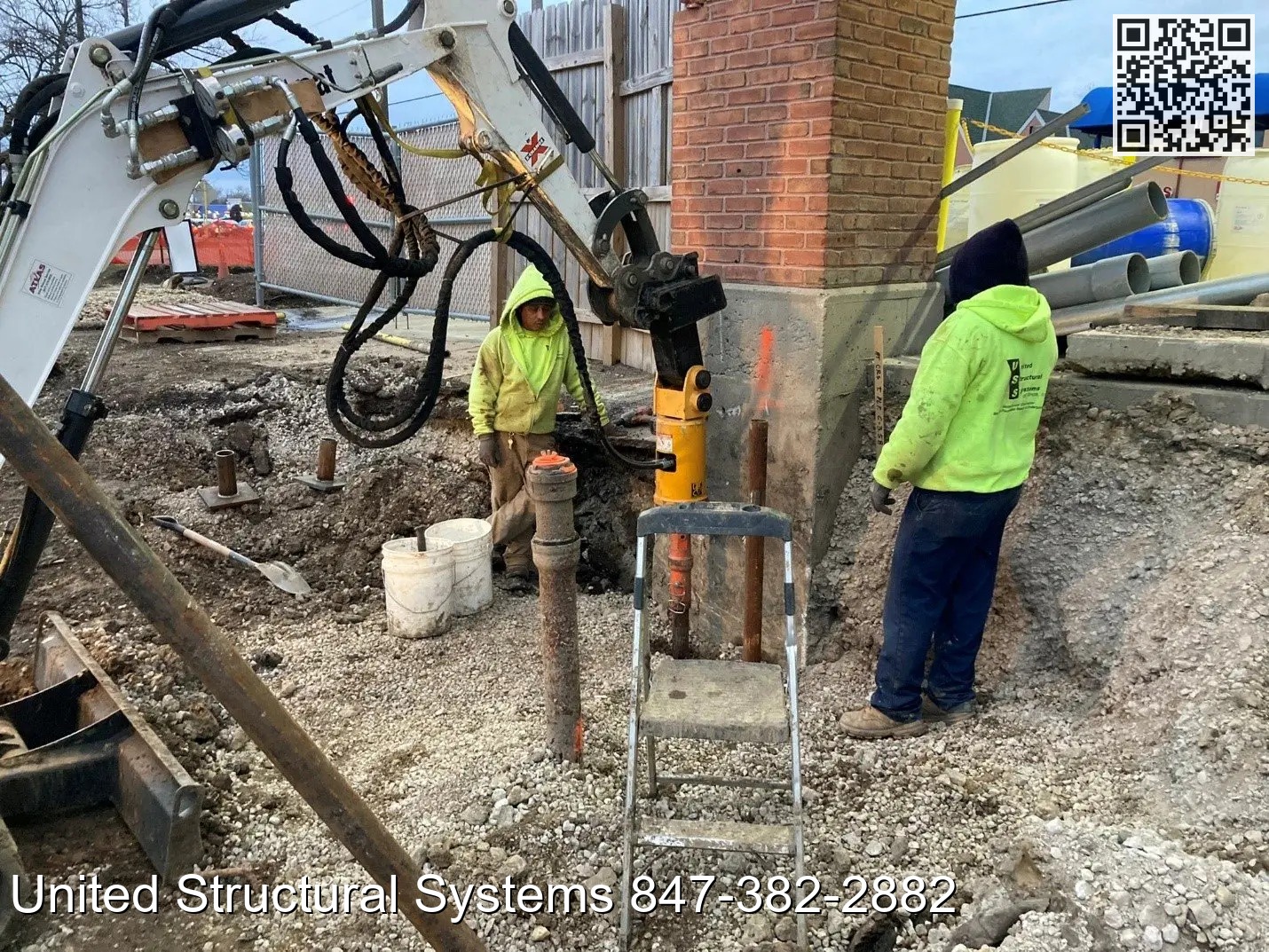
Fuel and also air supply need to have winterization. Usage winter-grade diesel, address for gelling, and drainpipe humidity from sky collections. Icy condensation in a downhole hammer will definitely destroy your early morning. Hose pipes that move with the pole ought to be actually sleeved to prevent breaking, and simple connects must be actually examined daily. Motes, however small things are what hinder a cold-weather shift.
Adjusting installation techniques in icy ground
A helical pile earns its capability coming from commercial helical pile services helix bearing in proficient strata and, to a much smaller magnitude, shaft friction. Frosted crusts include a frictional shell that performs not matter long term. I intend to permeate the frost promptly and also cleanly, then decrease as well as check out twist in the concept coatings. If you chase after torque in the crust, you melt opportunity and use trips for records that does certainly not pay for the bills.
Pilot holes by means of the freeze are not the opponent. A 2 to 3 in fly to a couple of inches listed below the frosted area performs certainly not lessen capacity at concept depth. As a matter of fact, it yields an extra authentic torque-to-capacity connection since it eliminates the inaccurate higher on top. For commercial helical tieback anchor installation with a freeze wall or frozen backfill, predrilling a captain saves the tieback fiber coming from knife-like ice lenses that may harm coat or even galvanizing.
Rotation rate matters in chilly. I choose reduced revoltions per minute for much better soil engagement in the bearing layer, yet will certainly boost revoltions per minute somewhat in the frozen cap to decrease babble and maintain the heap vertical. Operators needs to anticipate a short loss of torque when the top coil bursts out of the crust right into warmer soil, after that a progressive growth. If you view a 2nd unpredicted torque spike at mid-depth in winter season, carry out certainly not assume it is actually a rock. Check for refrozen perched water lens. They experience similar yet rupture quickly the moment heated through abrasion. If creation stalls at that lense, you can easily pause and steam a tiny comfort gap beside the pile line to soothe the ice bond.
For commercial resistance pile installation, steering with a frozen shell usually enhances impact matters that kick back to ordinary below. If you capture refusal at the shell for a prepared number of blows every in, you jeopardize underdriving the heap. Maintain the approval criteria keyed to the intended bearing layer, not the surface. I have actually used light predrilling for protection heaps too, purely via the frost. It is actually not unfaithful. It is actually clearing away noise.
Micropiles require unique care at the bond zone. The steel holds tons to the bond span, as well as wintertime wishes to steal that bond along with segregated cement or even ice-lubricated annuli. Cozy the hole before grouting if groundwater neighbors icy. Circulate warm and comfortable water before the tremie. Aim for grout temperatures near the top end of the spec envelope, at that point shield the dog collar. If you are actually stress grouting, make up chillier pipe wall structures and also pump friction. Your scale might reveal aim at stress, however cold, dense cement can induce an obvious stress increase that performs not translate to flow. Validate actual intake through keeping an eye on profits as well as batch mass equilibrium, not simply pressure.
QA/ QC that recognizes winter months realities
Quality control in the cold weather is actually part persistence, part style. On helical piles, twist records require notes that clarify the freeze zone as well as the procedure used to get through it. If you predrilled, file diameter and also intensity. Examiners appreciate trustworthiness much more than artistic curves. On commercial helical pile installation I also like to perform at the very least one confirmation tons exam early in a winter months stage, if possible on a pile with depictive twist at style depth. It anchors the torque relationship and also gives confidence when the top-of-hole conditions are actually misleading.
On the test edge, cold adjustments hydraulics and also machinery. Load tissues as well as evaluates read great in the chilly, however hoses between them can easily obtain strong, which adds abrasion as well as hysteresis. I establish the exam frame in the hottest aspect of the time when possible, protect the create along with tarpaulins, and maintain assesses inside a hot container along with perspective home windows. For tieback anchors, verification and performance testing can take much longer as grout treatments gradually. If the specification allows, routine testing 2 days behind standard or validate cube breaks before screening. No person would like to describe an inaccurate failing given that cement went to 35 F overnight.
Concrete and also masonry adjacent to your job have their very own winter limits. If your deep foundation repair sits under a slab that will definitely be poured in winter, correlative treating opportunities as well as heating units. Foundation crack repair in winter requires dry, hot substratum to connect epoxies appropriately. The sequence matters: surface stacks or even tieback anchors, then cozy and dry, then crack treatment, then flooring pour. The GC will certainly thank you.
Safety and also crew monitoring when it is brutal cold
Crew functionality goes down when health conditions are actually unpleasant, and also the job comes to be harmful when hands go numbed. I set up a warm trailer near the work face and press briefer turnings: 40 mins on, 20 moments off in harsh cold. Operators need to have proper gloves that still enable feel on the managements. Night work in winter aggravates tiredness. If the project needs it, flood the workplace with lighting, as well as provide a crystal clear course coming from trailers to rigs to stay away from slips on dark ice. De-ice paths at the start and midway with the shift.
Heat resources require venting. Diesel heaters put under a tarp for grout or pump security ought to have a specialized fresh-air gap. Carbon monoxide accumulates where you the very least anticipate it, as well as screens are low-priced. Maintain fire extinguishers near heating systems as well as fuel, and establishment acetylene as well as oxygen where they will certainly not freeze regulatory authorities strong. I have observed more delays coming from an icy regulator than any other solitary device in winter.
Case work: three popular winter season scenarios
A retail pad over deep-seated fill. The soils were actually soft sand along with a high water dining table. The freeze went 18 inches deep in the course of a January cold wave. Our experts possessed 150 helical overdo a precarious timetable. The answer was actually to predrill a 3 inch fly by means of the frost for each and every place with a sunny rig at sunrise, at that point follow along with the main drive head. Twist logs revealed a clean switch into consistent sands below 6 feet, as well as the mean installation twist at layout intensity matched the summer months exam plan. Production attacked 20 to 25 stacks every day with a three-person crew due to the fact that our team quit dealing with the crust and paid attention to actual embedment.
An existing stockroom along with piece negotiation near dock doors, planned for structural foundation repair along with protection stacks. The frozen shell overstated blow tallies near the slab edge. Our team set up a guideline: ignore refusal within the initial foot if it coincided with the freeze layer, as well as keep driving to get to the designated bearing stratum. Where draft calculates kept higher past that depth, our company backed down and used a tiny auger to alleviate the shell just before resuming. Approval logs annotated the predrill depths, and the designer accepted the approach after an internet site trial. The fixed docks saw consistent airlift in the course of hoisting because the piles were actually settled adequately, not hanging in the crust.
Micropiles for a medical center development under winter defense. Specs needed cool cement above 50 F. Our team constructed a small warmed outdoor tents around the pump as well as mixer, heated water to 90 F, and held cement inside through the night. Grout surfaced in to 36 F ground, so our team bled a tiny amount till discharge maintained at 60 F, after that dedicated to the tremie. Flow meters and also set mass balance verified genuine consumption, not simply tension. Connection examinations handed down the initial try despite the chilly, and supports for the adjacent industrial helical tieback installation were sequenced with identical grout controls.
Special problems for helical tieback anchors in icy backfill
Tiebacks usually leave structure borders where backfill is actually disrupted and also holds water. In winter months, that area may ice up hard. Exploration creates it much worse if you asperse frosted greats along solitary confinement wall, which hinders cement connect. I favor to pierce along with low water as well as keep the birthed tidy along with sky where permitted, at that point warm up solitary confinement along with a brief vapor lance if ice series. For long-lasting helical tieback anchors, galvanizing may be damaged by icy inclusions near the skin. Slow the start, shield the threads, as well as stay away from levering the extension versus a frosted wall.
Testing tiebacks calls for clear criteria as well as patience. Proof lots will move much less originally in the cold since the system is actually stiffened, after that may creep somewhat more as the support warms toward stability. Monitor displacement very carefully and also carry out certainly not hurry to launch. If the specification offers a creep standard over 10 mins, I require 15 in the cold weather. For momentary tiebacks ashore, correlative de-icing around the waler thus ice does certainly not equate to false variation readings.
Dealing with powers as well as surface drainage
Winter exposes every negative drain choice. Reduction snow near generator tires produces a little stream that is going to refreeze throughout your job zone by lunch. Just before propelling, cut superficial swales to lead meltwater away from rigs, electrical cables, and stack scalps. Always keep energy situates existing. Icy ground lures teams to pry along with bars and also choices, which is actually exactly how fiber collections acquire severed. For tieback anchors, thermal contraction can easily create utility standoffs experience tighter than they are. Action offsets two times and also stay conservative.
If you neighbor online heavy steam lines, salt storage space, or even de-icing procedures, make up chemical substance impacts. Chlorides can speed up deterioration on arid steel add-ons or damage epoxy finishings made use of in foundation crack repair. Establishment consumables inside as well as maintain very clear covers on any type of revealed tendon heads or even couplers.
When to delay and also when to drive through
Some times you press, others you park it. I prepared 3 go or even no-go triggers beyond raw temperature.
- Wind plus temperature that pushes wind chill listed below unfavorable 10 F for more than 2 hours. Tools is actually a single thing, hands are actually another. Heavy freezing rain. The rig comes to be a skating ring, and also electrical threats multiply. Insufficient heating system for grout or even hydraulic systems. If you can certainly not keep cement temperature within spec or even may not take the inflate to constant pressure, you are actually losing time and welcoming rework.
On the other hand, bright cold days with mild wind could be efficient if the program is tight. Prioritize stacks that do not demand rich excavation or even considerable palm job. If you have to dig deep into, utilize insulated coverings to always keep the trench walls coming from glazing over, and backfill rapidly to stay away from leaving behind a freeze-prone gap around the brand new pile cap.
Integration along with more comprehensive base work
Cold-weather loading rarely stands alone. It links into commercial foundation repair scopes that include underpinning, foundation crack repair, and also slab replacement. Helical piles under existing footings require dependable bearing at depth and also a sensible load transactions information on top. In the cool, grout-filled stack hats remedy slower, so we add warmth quilts as well as temperature level sensors to confirm they get to reasonable durability prior to jacking or even loading. Where micropiles tie into a level shaft, protect the formwork and also manage heat energy so differential relieving carries out not split the shaft at reentrant corners.
Communication with the architectural designer issues. If you revise setup methods along with predrilling with freeze or heating grout, record it. If torque-to-capacity factors were actually established from summer season screening, take into consideration operating a winter season verification test to affirm that design assumptions still hold in the area. On bigger commercial helical pile installation courses, I have actually used a set of sacrificial exam stacks to bracket creation: one mounted in a location along with marginal freeze, one set up in a frost-heavy area, each tons tested to validate capacity about twist. The records let everybody inhale less complicated as well as maintained the assessor pleasant with accepting torque market values that looked unusual near the top.
Practical check-list for website leads
- Confirm frost depth daily at several factors. Record and show the staff so they understand what the leading is going to feel like and also when to anticipate torque changes. Stage warm: one collection for people, one for grout and also hydraulics. Address all of them as different systems along with separate electrical power as well as fuel. Calibrate or even verify torque as well as tension devices after the first deeper freeze. Replay if analyses drift or if tools sits abandoned for greater than a week. Decide on predrilling approach before the time begins. Outfit and crew for it so you carry out certainly not improvisate under pressure. Close the loop along with the inspector. Illustrate logs, flag freeze effects, as well as suggest sensible recognition requirements concentrated on design-bearing layers.
Final field notes
Cold is not a reason for poor information or even feeble functionality. It only transforms the inputs. A well-run wintertime campaign on helical piles, resistance piles, micropiles, or tieback anchors appears deliberate. The staff gets there along with a plan for frost, the tools begins warm, the logs make sense, as well as grout temps remain in selection. You still lift quelled footings easily, still supply commercial foundation stabilization that passes examination, as well as still keep the routine from wandering when the thermometer plunges. The job seeks determination and regard for physics, nothing even more amazing than that.
If you move toward wintertime setup keeping that state of mind, the period can be stable and also expected. Consumers notice when you do certainly not jump at the forecast. So do your staffs. And your piles will say to the story months later on when the snowfall is actually gone as well as the property lots bear the means they were developed to.