If you handle business homes long enough, you discover the difference in between a resolution trouble and a lateral movement concern. Slab heaves, stair-step gaps, and also drooping light beams tell one story. Stooped basement wall surfaces, leaning escalator shafts, and also preserving constructs sneaking toward a road inform yet another. Helical tieback anchors stay in that second tale. They are actually the utility vehicle for resisting lateral tons where digging is actually limited, soils are actually unstable, or even speed and also access constraints make traditional answers impractical.
I discovered this by hand on a 1960s office complex along with a brick front view as well as a cellar that open up to a filling dock. The dock wall surface had actually been patched a lots opportunities. Every winter the tuckpointing neglected, and also every spring season the wall structure pitched a little extra. Digging deep into ten feets deep next to powers and also an occupied street was a nonstarter. Helical tieback anchors fixed it safely: low disturbance, an expected capacity, as well as a manufacturer's warranty I could possibly support. Since then, I seek helical tiebacks whenever side restriction is the controling issue during the course of office foundation stabilization.
What a helical tieback anchor really does
Despite the title, a helical tieback is certainly not a pile in the vertical feeling. Think about it as a steel tendon with helical plates that screws flat or even at a shallow higher slant in to proficient soil or even weather-beaten rock, after that acquires secured off to a wall, dragging, or even level beam. The coils cultivate axial capability by means of end-bearing and also abrasion along bum rap. The "tieback" section is the tension taken up between the anchor head and the supported structure.
Unlike grouted stone anchors that require drill-and-grout cycles as well as remedying opportunity, a helical tieback supplies immediate tons with torque-to-capacity correlation. Along with calibrated setup, you confirm capacity as you go. That confirmation is a huge main reason these supports have actually ended up being a staple in commercial foundation repair and structural foundation repair where routines are actually tight.
Situations that ask for helical tieback anchors
The clearest make use of instances discuss a design: side the planet stress or even hydrostatic pressures that go over a design's protection, but without area, spending plan, or even opportunity for major excavation or even cast-in-place countermeasures.
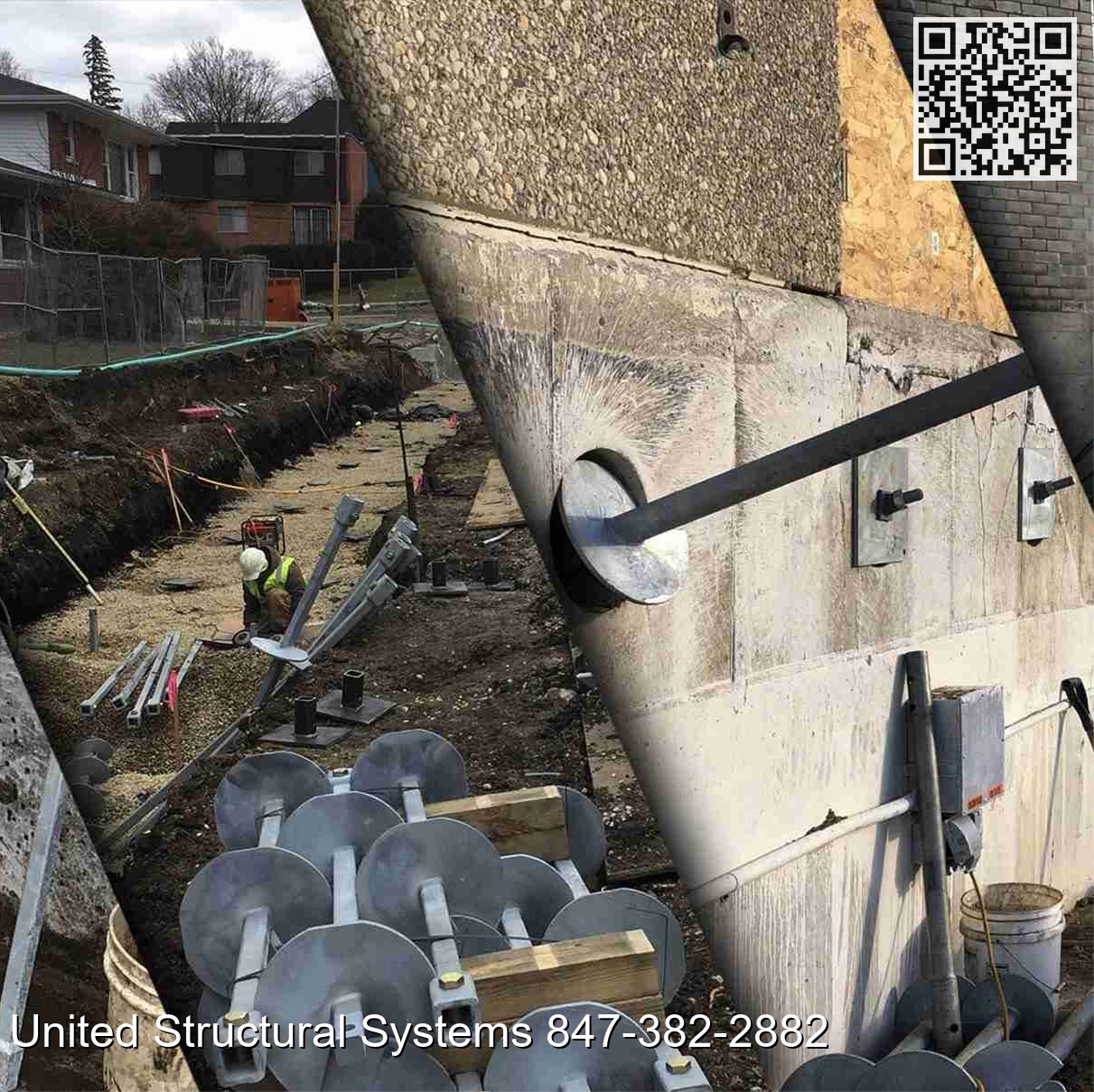
Retaining constructs that may not slip any sort of additionally. We typically put up helical tiebacks on maintaining wall surfaces beside public rights-of-way, parking decks, or even home pipes where digging will stop web traffic or even break easements. Tiebacks installed coming from the within skin of the wall solve this perfectly. Concept usually targets earth pressure at-rest or active-plus-surcharge, along with proper bunch factors.
Basement as well as below-grade wall surfaces showing inner variation. Bowed or trimmed CMU, fractured cast-in-place walls, and also spandrel ray of light hardship indicate side overload, not resolution. Helical tieback installment with wall structure centers, incorporated along with internal walers or plates, may support the wall as well as, in some cases, recuperate a part of deflection.
Temporary shoring for excavations and also enhancements. For commercial developments or power passages, helical tieback anchors couple with soldier stacks or even piece piles to hold off cuts while groundworks are actually installed. Specialists choose all of them given that there is no cement treating problem, as well as a tiny workers along with portable tools may function in tight urban lots.
Seawalls and beachfront retaining walls. Timber or even steel retaining walls lose area eventually. Changing deadman anchors along with helical anchors, commonly angled to reach beneath steady upland grounds, repairs capacity without destroying promenades or even landscaping. Corrosion security and also effective hot-dip priming come to be necessary near saltwater.
Brick or rock façade stablizing over areaways as well as passages. In dense midtown corridors, spaces under walkways and superficial tunnels make complex excavation. Helical tiebacks can be cast to bypass deep spaces and secure right into qualified strata, then hooked up to a new lintel or even indoor frame.
In each scenario, the value hinges on setting in motion strain capacity against side pressures while always keeping disruption low. That is actually various coming from commercial helical pile installation or even commercial resistance pile installation, which target vertical bunch assistance. Helical tiebacks assist wall surfaces as well as digging units; helical piles as well as resistance stacks support pillars, slabs, and quality beams.
When helical tiebacks are actually the inappropriate tool
They are actually certainly not a magic bullet. Poor candidate ailments feature incredibly thick cobble levels that decline infiltration, extensive boulders, or extremely acrid dirts without a crafted corrosion planning. If the wall surface is actually actually at the brink of failure with smashed devices and also insufficient birth control action, tiebacks alone may not save it; you might need to restore and combine steel structures. Where resonance regulations are severe, also the moderate electricity coming from a drive electric motor may be an issue, although this is actually rare.
Where the layout calls for especially high individual capacities, such as single supports above 150 to 200 kips in pressure, micropiles with casing as well as grout bulb or drilled rock anchors may be actually much more cost-effective each capacity. For short-term shoring where demilitarizing will be actually necessary, dirt nails or grouted anchors can easily outmatch in unit expense, specifically on big recurring runs with easy access.
Reading the dirt, certainly not only the drawings
Most requirements hinge on apparent the planet tension diagrams and factored lots. Those issue, but success hangs on stratigraphy. Helical anchors need to have a qualified bearing level for the coils. In soft clay-baseds, our company upsize the coil diameter and also enhance the amount of plates, yet the style has to still deliver ample embedment past the active wedge. In sands, we look for liquefaction potential as well as drainpipe pathways. In layered accounts, it is common to avoid a silty joint as well as pursue the thick sand at 18 to 25 feets for reliable twist correlation.
On a medical facility restoration in glacial till, our team predrilled fly gaps by means of a 6-foot cobble band to connect with the dense matrix below. Predrill performs not extinguish ability if the helixes still nibble right into undisturbed component at the style depth, but it demands cautious twist monitoring and also, at times, a changed Kt (the torque relationship continuous) based upon industry proof tests.
How helical tiebacks compare to other support and heap systems
Owners and also developers usually ask whether they should use helical piles, protection piles, micropiles, or even tieback anchors. The response flows coming from the lots path and also constructability constraints.
Commercial helical pile installation and also resistance pile setup handle vertical payloads as well as settlement deal control. Helical piles, with their helical platters, excel in clay-baseds as well as combined soils, could be put in along with low noise and also vibration, as well as supply quick capacity. Protection stacks, or even push heaps, develop ability by mounting steel stacks versus the structure, displacing ground as opposed to eliminating it. They work for deriving when space is actually limited as well as when the existing property can work as a reaction to drive the piles.
Micropiles, frequently steel inspecting with grouted centers, beam in really heavy grounds or even rock, with higher allowed bunches and also flexibility for each stress and also compression. Micropile installation requires drilling, reinforcement, and also cement curing, which increases opportunity yet supplies strong efficiency in hard geography and constricted sites. Micropiles can easily double as tiebacks with proper concept, often used when the called for stress capacity is actually past normal helical tieback ranges.
Helical tieback anchors sit in the side lots edge. Where you need to pull back a wall or preserve an excavation without massive equipment, they offer you verified, quick stress ability with marginal spoils. They can easily match various other deep foundation repair methods: a wall surface maintained with tiebacks could sit atop a quality shaft assisted by helical piles, resistance heaps, or micropiles, each playing a specific role.
The mechanics of style that matter in the field
The academic edge is familiar: define the active wedge, use planet pressure coefficients, incorporate additional charges, include hydrostatic or even seismic components, and then pick a tieback design and also viewpoint. In practice, a handful of information move the needle.
Embedment span beyond the academic failing aircraft needs to have margin. Our experts target eight to twelve feets past the degree in clay-based, in some cases even more in sand to connect with dense strata. The even farther the coils rest past the failing wedge, the less vulnerable they are actually to little mistakes in dirt parameters.
Helix setup is actually certainly not aesthetic. A two-helix support along with 8 as well as 10 inch layers behaves in a different way than a three-helix along with 10, 12, 14 in layers. Plate spacing of 3 opportunities the diameter minimizes plate overlap in grounds and also boosts net capacity. In gentle clays, bigger diameters with broader spacing conduct much better, yet drive torque rises and also set up devices need to be sized accordingly.
Angle of installation and bond size placement effect ability as well as performance. Steeper slants get to deeper faster yet may clash with indoor impediments. A flatter angle minimizes crown height inside the building yet extends the anchor as well as might demand a longer zone beyond the failing aircraft. Harmonizing slant along with website geometry is actually component craft, part math.
Corrosion security can not be actually a second thought. For long-lasting commercial foundation stabilization, our experts point out hot-dip priming, boosted propitiatory thickness, and also in some cases a double-correlation method where expected loss is quantified over 50 to 75 years. In extremely aggressive grounds, utilizing epoxy-coated elements or even encapsulated shafts with grout-filled sleeves might be actually justified.
Load proof belongs on the critical pathway. Set up torque is a proxy, not a warranty. Proof examinations on a minimum of 5 percent of supports, as well as functionality tests on decided on places, reduce risk. If movement under proof bunch goes beyond standards, secure the concept before development continues.
Installation facts that divide good coming from great
Commercial helical tieback anchor installment unfolds just about similarly whenever, yet the outcomes vary extensively relying on team knowledge and also the premium of layout.
Access and targeting are actually the 1st restrictions. Inside a cellar, you commonly function under beams, around mechanicals, and also with brickwork cores. Our company consider core sites to steer clear of rebar or even connect light beams, use a scanning device to map steel, as well as put together walers before teaching to handle alignment.
Torque tracking must be disciplined. Make use of a calibrated electronic torque display and log readings at each feet of penetration. An unexpected twist spike can signal a cobble; a stage in sand could propose slight crash around the shaft. The lead installer brings in real-time phone calls: wiggle out slightly, readjust rate, or swap to a distinct coil arrangement if you are not obtaining the expected torque at style depth.
Grouting is certainly not consistently aspect of helical anchor work, but some requirements call for post-grout to boost capability in coarse-grained dirts. When made use of, low-mobility grout pumped at the coil elevation can nail down functionality. The trade-off is opportunity and also clean-up.
Head information are where looks and also upkeep converge. On left open interior walls, our experts make use of low-profile platters or integrate the anchor head right into a steel waler painted to match. On outdoor preserving wall surfaces, we aim to break-off platters follow this link behind a brand new laminate or even capstone to always keep the anchor equipment concealed as well as off of straight water exposure.
Coordination with other deep foundation repair trades concerns. If the venture likewise features commercial helical pile installation for new pillars or commercial micro pile installation under a piece, lay out the anchor enthusiast patterns first to steer clear of clashes. It is less complicated to shift a pile area just before drilling than to reroute a line of tiebacks that actually penetrate the wall.
A realistic examine capability and also movement
Owners occasionally anticipate zero motion under lots. That is certainly not exactly how soil-structure devices act. A helical tieback anchor has elastic elongation under tension, plus slight seats of layers as well as compressibility of the dirt mass. In a common basement wall retrofit, expect a few millimeters of draw at verification weight, and also potentially 1 to 3 millimeters much more during lock-off as the wall structure begins to discuss payload. Those amounts are actually certainly not breakdowns; they demonstrate physics.
If you are actually trying to pull a stooped wall surface back to plumb, make sure. Attracting too tough in one shot can break down breakable stonework or shear anchors ahead. Our experts present tons throughout support lines and display split assesses. Occasionally the most ideal outcome is actually stablizing at the current line, with cosmetics managed through epoxy injection or masonry repair services. For foundation crack repair, tiebacks cease the source of motion; they perform not "heal" gaps. You still require to take care of water control, repointing, or epoxy as well as carbon thread where appropriate.
Permitting, powers, and risk
Do certainly not skip power finds inside and also outside. Even inside a cellar, channels may operate in wall structures as well as slabs. In older frameworks, as-built sketches are actually optimistic myth. A non-destructive check and also a cautious fly hole strategy save headaches. For outside tiebacks intercrossing feature series, safe and secure easements or even make use of encroachment contracts. A lot of legal systems manage tiebacks beneath public rights-of-way as advancements that require detachable anchors or even unique permits.
Seismic areas deliver additional inspections. Tiebacks can be component of an overall seismic conditioning package deal, yet concept must consider cyclic weight results as well as potential loss of easy pressure during trembling. In saturated sands, reduction of lateral protection during the course of a celebration may justify deeper embedment as well as repetitive rows.
Cost as well as routine expectations
Compared to drilled anchors, helical tiebacks typically reduced day of rests the timetable due to the fact that there is actually no cement cure opportunity prior to load screening and lock-off. In straightforward soils, a two-person team with the correct drive head may put in numerous supports per day, more if access is outstanding and also embedment is actually shallow. Expenses vary widely through area as well as specification, but on business tasks the unit cost properties favorably when ability necessities remain in the 20 to 80 kip selection per anchor and internet site logistics are tight.
When capacity demands increase or dirts battle seepage, micropiles or grouted anchors can easily catch up in cost-effectiveness. A mixed approach is common: helical tiebacks where get access to is actually tough as well as lots are actually intermediate, micropiles where the lots are actually high or geology is tough, as well as helical piles or even resistance heaps for upright help. That harmony maintains budgets reasonable while complying with design criteria.
Case snapshots coming from the field
Parking garage keeping wall, downtown infill. The wall structure protruded 1.5 inches at midheight on the most affordable amount. Digging outside the property line was actually difficult. Our team cored at staggered elevations, put up helical tiebacks at a 15 level upward angle to reach heavy sand at 22 feet, as well as secured off to a steel waler covering pillar to pillar. Evidence tests at 1.5 times style tons stabilized within 0.08 ins. The owner resumed bays within the week.
Bulkhead rehabilitation at a marina. Hardwood deadman anchors were deteriorated in deep sea burst zones. Our company used hot-dip driven helical anchors with extensive propitiatory thickness, put in coming from the dock deck at a superficial angle to connect with upland grounds. A continual limit network escalate tons. Routine twist spikes indicated buried debris; our company changed courses as well as documented twist extensively. The harbour obtained an additional decade of solution lifestyle along with marginal interruption to tenants.
Historic basement with stone rubble wall structures. The walls had irregular skins and lime mortar. Tieback scalps needed artistic bearing. We put up steel walers shimmed to the brickwork, firmed up in stages to avoid coming stones, and added internal steel blog posts under shafts sustained through helical piles. The combo of helical tiebacks as well as helical piles provided the proprietor both sidewise as well as upright stabilization without invasive excavation.
Integrating tiebacks right into a comprehensive repair plan
A productive commercial foundation stabilization plan appears over one's head item. Lateral restraint coming from tiebacks sets naturally with drain improvements to reduce hydrostatic pressure. Water is merciless: if your wall structure finds groundwater, include boundary drains, septic tank verboseness, and basement waterproofing membrane layers. Inside, handle architectural continuity. A tieback fastened into a cracked wall without waler or diaphragm support can center stress and also trigger brittle failure.
For jobs with resolution as well as sidewise problems, make use of the ideal mix. A quality shaft supported through helical piles or even resistance heaps deals with vertical bunches as well as stops additional negotiation. Helical tiebacks take care of lateral tension. If tons go over regular helical ranges or even geology controls, integrate micropiles or even grouted supports. The objective is not to promote one modern technology, yet to fulfill the building's needs along with a teamed up system.
Practical list for opting for helical tiebacks
- The driving trouble is side movement, certainly not upright negotiation, as well as excavation is actually constricted through utilities, home lines, or even social access. Subsurface investigation determines a competent bearing layer obtainable along with coils at affordable torque, past the active failing plane. Required working loads every anchor match within regular helical tieback capability ranges for offered tools and also team skills. The project gain from quick bunch proof and accelerated routine matched up to grouted systems. Corrosion problems are comprehended, as well as the concept includes ideal defense for the preferred solution life.
A word on service warranties and also documentation
Owners appreciate assurances. Promotion service warranties you can easily recognize by regulating variables. Calibrate torque devices, report installment records, always keep evidence exam reports, as well as photograph head details before they fade away responsible for coatings. Where anchors cross in to social or even nearby home, keep signed easements along with the task report. For structural foundation repair, that paper trail commonly becomes as useful as the steel on its own when the property modifications hands.
Where foundation crack repair fits
Tiebacks perform not shut fractures, yet they cease the lots that created all of them. After stabilization, epoxy injection may repair monolithic behavior in cement wall structures if cracks are completely dry and well-maintained. In stonework, stitching with helical bars set in grout, blended with repointing, provides constancy. When gaps are steered by hydrostatic tension, incorporate internal water drainage and also outdoor water-proofing where practical. It prevails to organize this pattern: maintain along with tiebacks, take care of water, then repair splits. That order lessens the opportunity of re-cracking.
Final ideas coming from the field
If the project inquires you to hold back dirt, water, or even a structure that would rather move sideways, helical tieback anchors ought to have a very early appeal. They bring predictable capacity, speed, and also a little jobsite footprint. They integrate properly along with other factors of deep foundation repair, featuring helical piles, protection piles, and also micropiles, each filling its own street. Their restrictions are as important as their strengths: geography, oxidation, and also capability goals must align. When they perform, the result is burning out in the very best way, a wall that remains and a customer that forgets you were ever before there.